
Thursday, Oct 15, 2026
The Indicator Scoop: Educating All Ages on the Importance of Vernal Pools
Written by Hannah Jacobowitz, Michigan Nature Association
All photos courtesy of Hannah Lopinski/Dawn Morgan
Hannah Lopinski has always had a passion for the water – and as the watershed technician for the Missaukee Conservation District, she works diligently to put that passion into practice.
Her responsibilities are numerous and varied – assessing water quality, monitoring streams, conducting culvert surveys, orchestrating outreach events, and providing assistance to landowners for water quality concerns. She is also Missaukee County’s Vernal Pools Partnership Coordinator, a position that puts her at the forefront of the Conservation District’s educational initiatives surrounding these ephemeral wetlands.
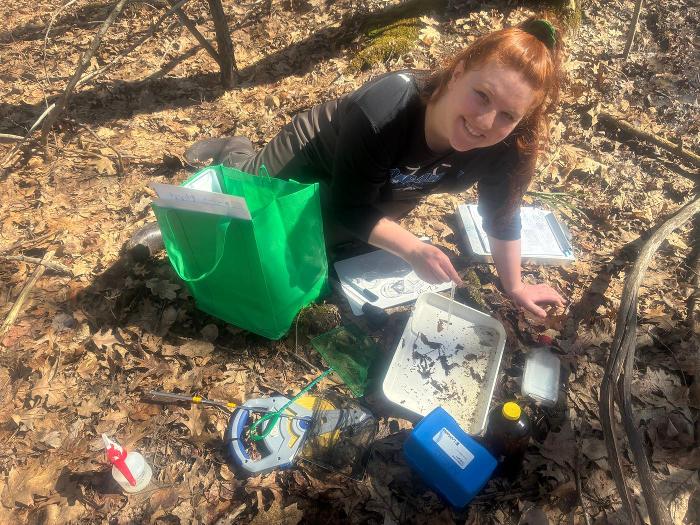
“There's such a need for protection and understanding of our water quality and health, and how what we do – even if it seems like it may be something super small that won't affect that water body's health – those things really do add up,” said Lopinski. “And I think it's really important that there's people who are stewards for our water and watersheds, [who] also are able to share and spread that information.”
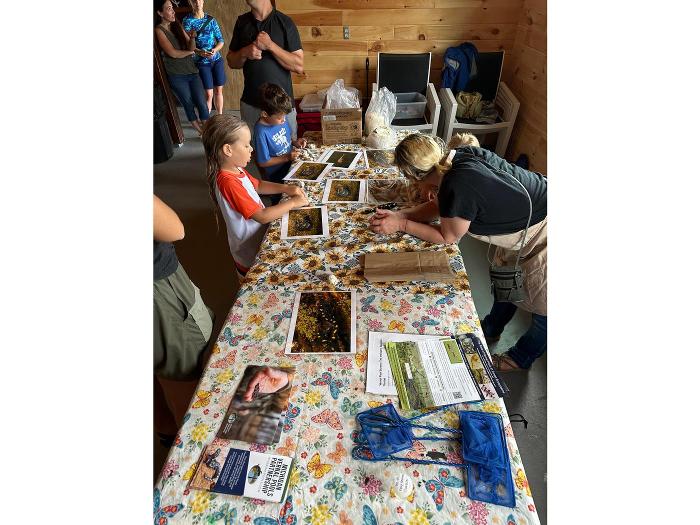
On August 5th, Lopinski hosted “Wild Wednesday,” the Conservation District’s first official event featuring vernal pools education. The event saw 33 people attend, with people of all ages enjoying the day’s variety of nature-based games and educational activities.
The event also featured a game of Lopinski’s own creation, titled “Vernal Pool Survey: The Indicator Species Scoop.”
“How I developed this game was I was actually scrolling Instagram, and I saw a video of these kids playing a game... and I saw them using a net to scoop up these little things in the water and then flip them over. And I thought, ‘Wow, that's such an easily accessible game for everyone – regardless of if someone has a disability, or whatever their age is. And it’s really fun and engaging, even for adults. So I thought, ‘Hey, why not turn that into something educational?’”
Gathering materials from around the office, Lopinski set to work on bringing her idea to life.
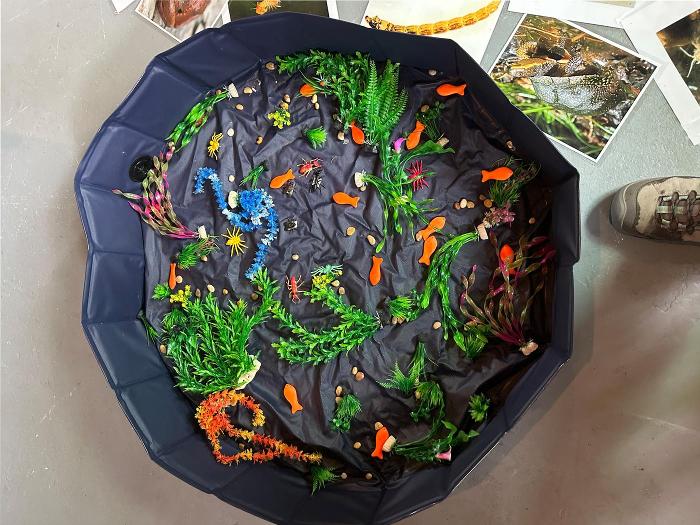
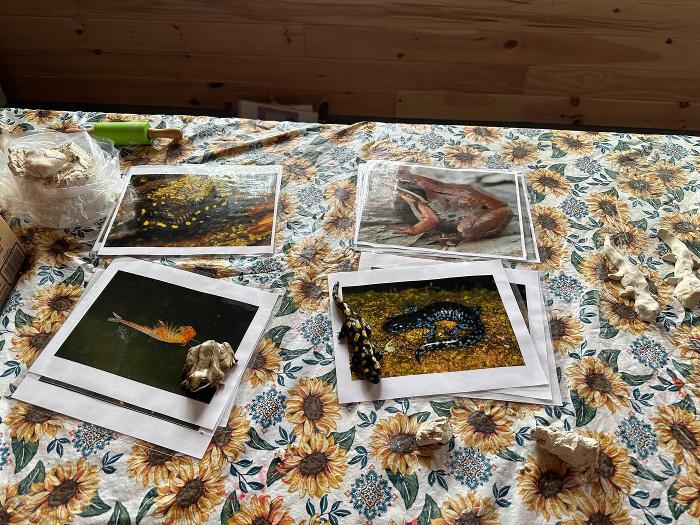
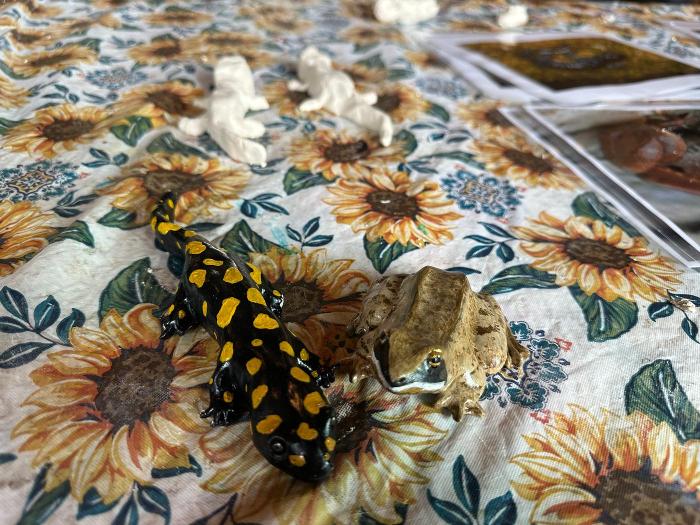
“We have these little inflatable kiddie pools in the office, and I grabbed one of those, some gravel and some aquatic plants that we use for other outreach teaching about invasive species or aquatic invasives, [and] these little plastic insects and fish,” said Lopinski. “So I made labels of different macroinvertebrates and other animals… and then I also had a few indicator species sprinkled in there, [including] the wood frog, the fairy shrimp, the spotted salamander, and the blue-spotted salamander.”
Once at the event, Lopinski introduced the game by giving participants an overview of vernal pools – what they are, why they’re important, and how to report one for verification if spotted. Next, each participant was given a net, and the opportunity to pick up an unidentified creature from the pool. They were then tasked with matching the species they pulled to one of an array of printed photographs, which included a mix of both indicator and non-indicator species.
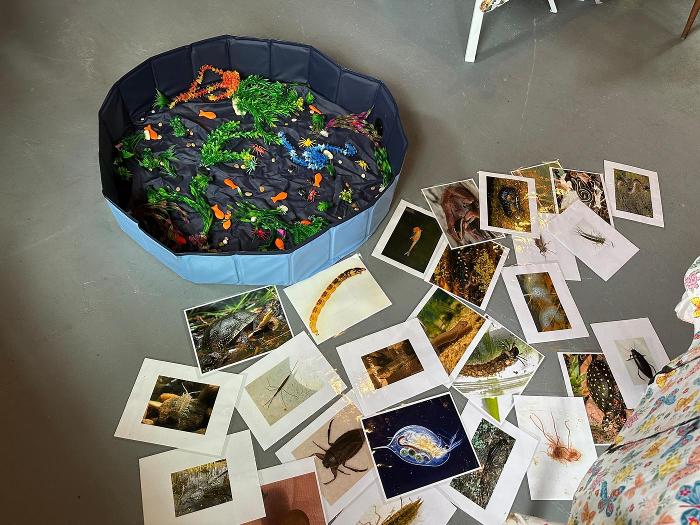
“Not only are they just looking at the species that they picked up, but they get to go through and look at every single one of the species that are in here,” said Lopinski. “And then when they do get an indicator species, we explain what that means if we were to find an indicator species in the field, and they get a prize.”
And after just one event, the results have been more than encouraging.
“It has been great,” said Lopinski. “We've [since] had people on Facebook comment ‘Oh my gosh, my kids can't stop talking about vernal pools. All they want to go out and do is look for vernal pools.’”
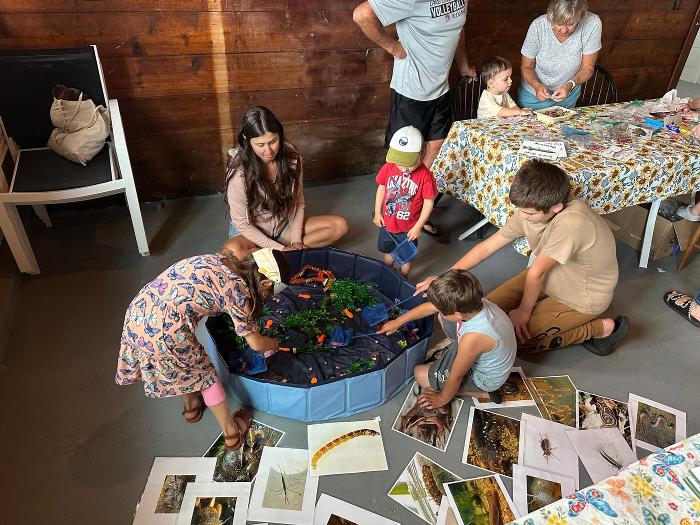
And kids weren’t the only ones inspired. The Conservation District offers pool surveys as site visits for those who believe they’ve spotted a vernal pool – and after Wild Wednesday, requests began to pour in.
“From just this one event directly, I have two site visits planned for next year from adults reaching out and saying, ‘Hey, I think I have a vernal pool on my property,’” said Lopinski.
This has been especially impactful, as the presence of vernal pools on private property is often one of the biggest hurdles in their identification.
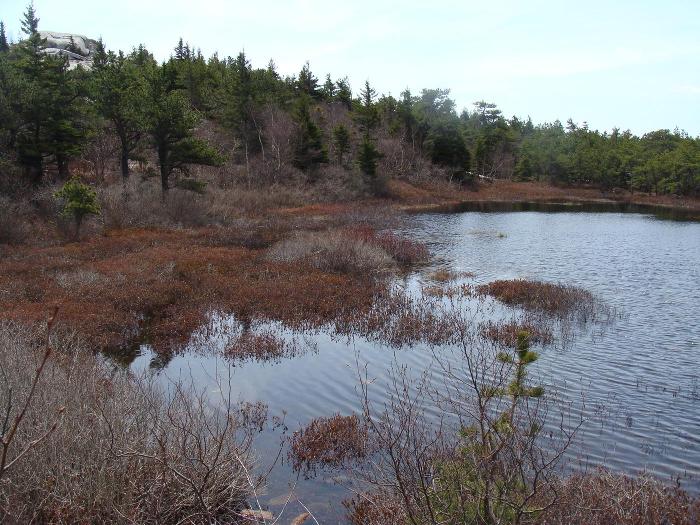
“Specifically in Missaukee County, there's a lot of private property and a lot of parcels that have hundreds and hundreds of acres on private property owned by one person. And with the amount of land that that covers, there could be hundreds of vernal pools on private property, maybe even thousands that we just don't know about or are inaccessible to us,” said Lopinski. “Even if you can ID [a vernal pool] with LIDAR or mapping, it's still private property, and you have to get permission to go there. So I think [this is] a really valuable piece to protecting, mapping and researching more vernal pools.”
Vernal pool sites that pass a three-visit verification process are entered into the official Survey123 database, where the Vernal Pool Partnership can use their data for mapping, research, and implementing future protections. And according to Lopinski, privately-owned sites also have the potential to be some of the most well-preserved.
“I think vernal pools on private property are somewhat more protected, [as opposed to] areas… where there may be a lot of trash, a lot of people leaving pet waste, a lot of fertilizer or pesticides or herbicides, or [people are] mowing directly up to the pool,” said Lopinski. “There's a lot more anthropogenic disturbance [in public areas]. Whereas if there's a vernal pool on someone's private property, they can really advocate and learn how to properly care for that resource that is so valuable and so special to them.”
And once properly informed, Lopinski says property owners are often more than willing to engage in that advocacy and protection.
“When people have something on their property, versus if it's just in a park or on someone else's property, they really care about it, and they take pride in it,” said Lopinski. “When I tell [homeowners], ‘Hey, you might have a vernal pool,’ a lot of them are super excited… and it's really cool to see how excited people get when they find out that they may have or do have a vernal pool on their property.”
As a steward of Missaukee County’s watershed, Lopinski herself also takes any opportunity she can to learn about and protect Michigan’s waters – and she encourages others to try their best to do the same.
“In Michigan specifically, we have one of the world's most valuable resources, and sometimes we forget about that. But our fresh water is not only one of our most valuable assets, it gives us all the lifestyle that we love living here in Michigan. To protect our water, our watersheds, and our water quality, it is not one organization. It is not one department. It is everyone living… in the watershed,” said Lopinski. “Making sure you're doing your part to keep our water bodies healthy is the best thing that we can all do to preserve our way of life here in Michigan.”